Working With Union Crews: What Corporate Event Planners Should Expect
When a planner tells us the venue they are looking at is a union house, the question that comes next is almost always the same one: what does that actually mean for my event?
It is a fair question, and the honest answer is that it means a specific set of rules about which work belongs to the house crew, how the load-in gets staffed, and how the day is scheduled. All of it is knowable in advance. Most of it never has to reach the planner at all when the coordination has been handled early.
That is really the whole point of this piece. Your job is not to become an expert in union labor. It is to work with a production partner who already speaks that language fluently, so the rules land in the plan instead of arriving as a surprise the week of the show.
What a union house actually asks of an event
Three things come up in nearly every conversation.
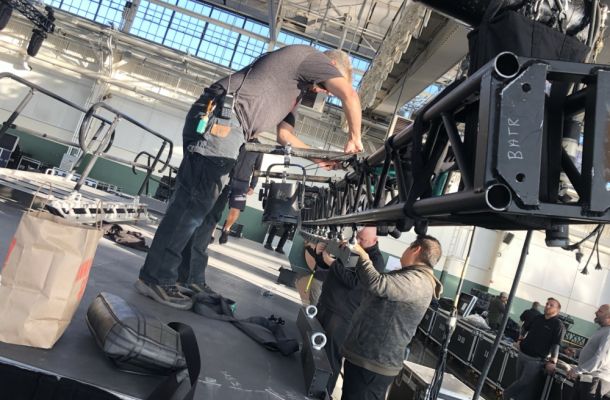
The first is jurisdiction, which is simply the question of whose work is whose. Rigging, electrical distribution, forklift and dock work, and the physical load-in generally belong to the house crew, and that line is drawn before anyone arrives. The second is crew size, since a union house sets minimum counts by room and by scope, and those counts hold whether the show is a two-hundred-person general session or a panel in a breakout room. The third is the shape of the day: call times run in blocks rather than by the hour, an eight-hour base day is the usual unit, and meal breaks have to land at particular points once the clock starts.
None of that is unusual, and none of it is hidden. It is published, it is consistent, and a partner who works these houses regularly can tell you most of it before you have signed anything.
The real worry is being blindsided, not the crew itself
We would rather say this plainly than talk around it, because it is what planners actually tell us. Very few people are worried about working alongside a union crew. What they are worried about is learning a rule after the plan is locked, when there is no room left in the schedule to absorb it.
That is a coordination problem, and coordination problems have a known fix. Ask the questions early, get the house rules in writing, and build the schedule around them rather than into them. The requirement does not go away, and we would not tell you it does. What goes away is the surprise, and in our experience the surprise is the part that costs a planner sleep.
The same crew, event after event
The most useful thing we have learned about union houses has less to do with rules than with people.
We treat the house crew as a recurring part of how we work, not as labor booked per show. That means the same faces on load-in, a shared shorthand about how our gear goes together, and a stagehand who already knows what our general-session build looks like before the first case comes off the truck. By the third event in a room, the coordination stops being a negotiation and starts being a routine.
This is not only our preference, either. The industry guidance published this year lands in the same place, recommending that producers build ongoing relationships with house crews rather than treating each show as a fresh transaction. It is worth saying because it means a planner can ask a production company how well they know the crew at a given house and expect a real answer.
One unified team: seamless collaboration on site
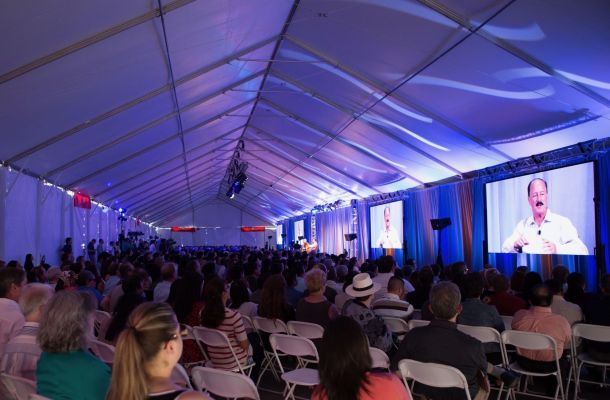
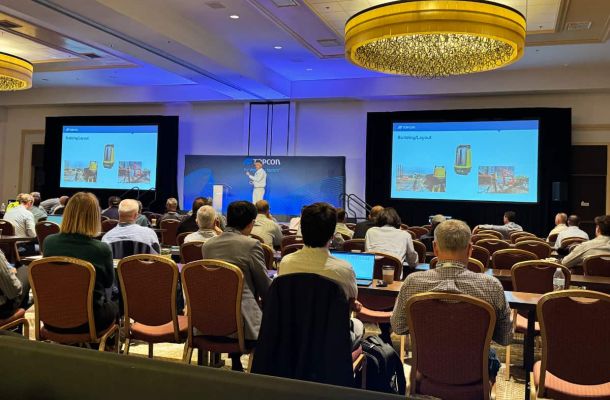
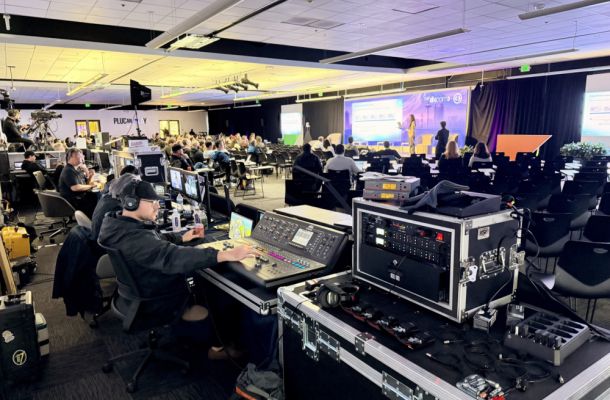
Earlier this year we produced the annual meeting for a financial-services association at a downtown San Francisco hotel, working alongside the house union crew across both the general session and the breakout rooms.
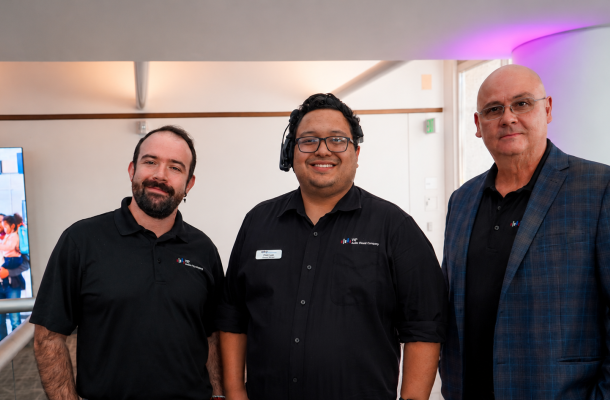
Rather than separating the workload or operating in siloes, we ran the entire event as one integrated team. Having a skilled union crew on board is a major asset to any production—their experience, local site knowledge, and craftsmanship elevate the whole room. When production partners and union stagehands collaborate as a unified team, the schedule runs smoother, communication is effortless, and the planner gets to focus on their event knowing every detail is covered.
We love working alongside union crews, and incorporating their expertise into our production workflow is something we look forward to on every show.
The schedule is where the coordination is actually won
If there is one place to spend your attention, it is the load-in window and the call times built around it.
That schedule is the real deliverable. It determines when the trucks arrive, how the crew calls stack up against the meal breaks, when the room is available for rehearsal, and how much air is left between the last piece of gear going up and the first attendee walking in. We build ours backwards from doors, then walk it with the house so the two versions match before anyone commits to it. When something in the program moves later, and something usually does, a schedule built that way has somewhere to give.
Crew sizing belongs in discovery
The size of the crew is a discovery conversation, not a show-week one.
It comes out of the walkthrough and the pre-con, where we can see the room, the program, and what the house requires, and put a number to it while there is still time to shape the plan around it. When that number lands early it is an ordinary line in the plan that everything else gets built around, and the program keeps all of its options.
Local fluency is what makes a multi-market program feel consistent
For planners running the same program in several cities, the value of that fluency compounds.
You get the same point of contact, the same gear, and the same setup procedure city to city, along with a team that already knows the shops, the load-in realities, and the house rules in each market. What we will not tell you is that the numbers come out identical everywhere, because trucking, travel, and local labor genuinely vary from one city to the next. What stays consistent is the process and the people running it, and that is the part that makes a national program feel like one program.
Let's talk through your fall program
If you have an event coming up in a union house, or you are weighing a venue and want to know what its rules will mean for your program, we are glad to walk through it with you. Fourth-quarter calendars are filling in now, so it is a good time to have that conversation while there is still room to plan around what we find.